What Is TMS Therapy? A Simple Guide for Patients by Dr Kunal Bahrani
Mental health conditions such as depression can significantly impact a person’s quality of life. While medications and psychotherapy help many individuals, some patients continue to struggle despite trying multiple treatments. This is where Transcranial Magnetic Stimulation (TMS) offers new hope. Transcranial Magnetic Stimulation (TMS) is a non-invasive brain stimulation therapy that uses magnetic pulses to stimulate specific areas of the brain responsible for mood regulation. It is an FDA-approved treatment for major depressive disorder, especially in patients who do not respond adequately to medications. Unlike many other treatments, TMS therapy does not require anesthesia, surgery, or sedation, making it a safe and convenient option for many patients. With growing clinical evidence, TMS is also being explored for several neurological and psychiatric conditions.
In Faridabad, Dr. Kunal Bahrani, widely regarded as the Best Neurologist for Transcranial Magnetic Stimulation (TMS) in Faridabad, provides advanced TMS therapy to help patients regain control over their mental health and neurological wellbeing.
Understanding Transcranial Magnetic Stimulation (TMS)
Transcranial Magnetic Stimulation is a modern treatment that uses targeted magnetic fields to stimulate nerve cells in the brain. The therapy primarily focuses on areas involved in mood regulation, emotional processing, and cognitive function.
In patients with depression, certain regions of the brain show reduced activity. TMS works by stimulating these areas and restoring healthier brain activity patterns.
The procedure is completely non-invasive, meaning it does not involve surgery or implants.
How TMS Therapy Works
TMS therapy uses advanced technology to deliver precise magnetic pulses to targeted brain areas.
The process includes:
- Electromagnetic Coil Placement
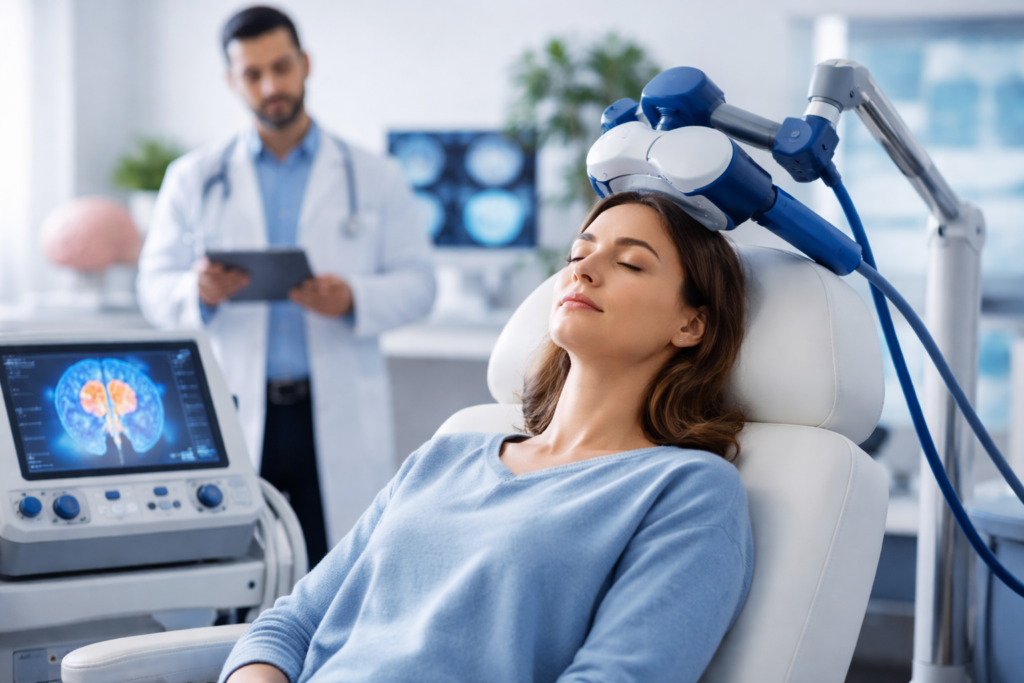
A specially designed electromagnetic coil is placed gently on the patient’s scalp, typically near the forehead where the brain’s mood centers are located.
- Magnetic Pulses
The coil generates repetitive magnetic pulses that pass through the skull and stimulate the underlying brain cells.
- Electrical Activity Stimulation
These pulses create small electrical currents in the brain tissue, which help activate underactive neural circuits associated with depression and mood disorders.
- Brain Activity Modulation
Over multiple sessions, these stimulations help rebalance neural activity, improving mood, cognitive function, and emotional stability.
Because the treatment does not involve medication or sedation, patients remain awake and alert throughout the procedure.
Conditions Treated with TMS Therapy
While TMS is most widely known for treating treatment-resistant depression, ongoing research and clinical experience show promising results for several other conditions.
- Treatment-Resistant Depression
TMS is particularly beneficial for individuals who have not responded to antidepressant medications or psychotherapy. Many patients experience significant improvement in mood and daily functioning.
- Obsessive Compulsive Disorder (OCD)
TMS therapy has shown encouraging results in reducing obsessive thoughts and compulsive behaviors, and in some countries it has been approved for OCD treatment.
- Post-Stroke Recovery
Research suggests TMS may help improve motor recovery and brain plasticity after stroke by stimulating damaged neural pathways.
- Chronic Pain Syndromes
TMS is being studied as a potential therapy for chronic neuropathic pain and fibromyalgia by influencing pain-processing networks in the brain.
- Neurological Disorders (Emerging Research)
Scientists are exploring the role of TMS in conditions such as:
- Parkinson’s disease
- Migraine
- Anxiety disorders
- Cognitive impairment
What Patients Can Expect During TMS Therapy
One of the major advantages of TMS therapy is that it is simple, comfortable, and performed as an outpatient procedure.
Before the Session
During the initial consultation, the neurologist will:
- Review medical history
- Assess current symptoms
- Evaluate previous treatments
- Determine whether TMS is suitable
The doctor will also determine the exact location and intensity of stimulation for the therapy.
During the Treatment Session
Each TMS session usually lasts 20 to 40 minutes.
Patients sit comfortably in a treatment chair while the electromagnetic coil is positioned on the scalp.
During the session:
- Patients may hear clicking sounds from the machine
- They may feel gentle tapping sensations on the scalp
- No anesthesia or sedation is required
Patients remain awake and fully conscious during the treatment.
After the Session
After the procedure:
- Patients can immediately resume normal activities
- They can drive themselves home
- There is no recovery downtime
Typically, TMS therapy is administered 5 days a week for 4–6 weeks, depending on the condition being treated.
Benefits of TMS Therapy
TMS therapy offers several advantages compared to traditional treatment options.
Non-Invasive Treatment
There is no surgery, implants, or anesthesia involved, making the procedure safe and comfortable.
Minimal Side Effects
Unlike many medications, TMS has very few systemic side effects.
Effective for Resistant Depression
TMS provides relief for many patients who have not improved with medications.
Quick Recovery
Since it is an outpatient procedure, patients can return to daily routines immediately after treatment.
Drug-Free Option
For patients who experience medication side effects, TMS provides a non-drug treatment alternative.
Possible Side Effects
TMS therapy is considered very safe, but like any medical procedure, some mild side effects may occur.
The most common include:
- Mild headache
- Scalp discomfort
- Tingling sensation during treatment
- Temporary facial muscle twitching
These side effects are usually mild and temporary.
Serious complications are extremely rare when the therapy is performed by experienced specialists.
Why Choose an Experienced Specialist for TMS?
Proper evaluation, accurate targeting, and individualized treatment planning are crucial for successful outcomes.
An experienced neurologist ensures:
- Correct diagnosis
- Proper patient selection
- Precise stimulation parameters
- Safe treatment protocols
In Faridabad, Dr. Kunal Bahrani, widely known as the Best Neurologist for Transcranial Magnetic Stimulation (TMS) in Faridabad, provides advanced neurological care with a patient-centered approach.
His expertise in modern neurological therapies ensures that patients receive safe, effective, and personalized treatment plans.
Conclusion
Transcranial Magnetic Stimulation (TMS) is an innovative and highly promising treatment for patients suffering from depression and other neurological conditions. By using targeted magnetic stimulation to activate brain circuits, TMS offers a safe and effective option for individuals who have not found relief through traditional treatments.
With minimal side effects, no anesthesia, and outpatient convenience, TMS therapy is rapidly becoming an important part of modern neurological care.
If you or a loved one are struggling with treatment-resistant depression or other neurological conditions, consulting an experienced specialist like Dr. Kunal Bahrani, the Best Neurologist for Transcranial Magnetic Stimulation (TMS) in Faridabad, can help you explore whether TMS therapy is the right solution.
Frequently Asked Questions (FAQs)
- Is TMS therapy painful?
No. Most patients only feel a gentle tapping sensation on the scalp during the treatment. It is generally well tolerated.
- How long does each TMS session take?
A typical TMS session lasts 20 to 40 minutes.
- How many sessions are required?
Most treatment plans involve 5 sessions per week for about 4–6 weeks, depending on the condition and response.
- Do I need anesthesia for TMS therapy?
No. TMS therapy is completely non-invasive and does not require anesthesia or sedation.
- Can I return to work after the treatment?
Yes. Patients can resume normal daily activities immediately after each session.
- Are there any long-term side effects?
TMS therapy is considered safe with minimal long-term risks when performed under proper medical supervision.
- Who is a good candidate for TMS therapy?
Patients who have not responded to antidepressant medications or cannot tolerate medication side effects may benefit from TMS.
- Is TMS therapy effective?
Many studies have shown significant improvement in depression symptoms, especially in treatment-resistant cases.