TMS Therapy for Treatment-Resistant Depression: What the Evidence Says
Depression is one of the most common mental health disorders worldwide, affecting millions of people and significantly impacting daily life, relationships, and overall well-being. While antidepressant medications and psychotherapy help many patients, a significant number do not respond adequately to these treatments. When depression does not improve after trying one or more antidepressant medications, it is known as Treatment-Resistant Depression (TRD).
For individuals struggling with TRD, finding effective treatment can feel frustrating and discouraging. Fortunately, advances in neuroscience have introduced new therapies that offer hope for patients who have not benefited from traditional treatments. One of the most promising options is TMS therapy, a non-invasive brain stimulation technique that has shown strong clinical evidence for treating depression.
TMS therapy works by stimulating specific regions of the brain involved in mood regulation using magnetic pulses. Over the past decade, numerous studies have demonstrated its effectiveness in improving symptoms of treatment-resistant depression.
In Faridabad, Dr. Kunal Bahrani, widely recognized as the Best Neurologist for Transcranial Magnetic Stimulation (TMS) in Faridabad, offers advanced TMS therapy for patients seeking safe, effective, and non-pharmacological treatment options for depression.
This article explains how TMS therapy works, the clinical evidence supporting its use in treatment-resistant depression, who benefits the most from this therapy, and what patients can expect during treatment.
Understanding Treatment-Resistant Depression (TRD)
Treatment-resistant depression refers to a form of major depressive disorder that does not respond adequately to standard antidepressant medications.
Doctors usually diagnose TRD when:
- A patient has tried at least one or two antidepressant medications
- Symptoms do not improve significantly
- Depression continues to interfere with daily functioning
Some patients may experience partial improvement with medication but continue to struggle with symptoms such as:
- Persistent sadness or low mood
- Lack of motivation
- Sleep disturbances
- Fatigue
- Difficulty concentrating
- Feelings of hopelessness
For these individuals, alternative treatment approaches such as Transcranial Magnetic Stimulation (TMS) therapy can offer meaningful improvement.
What Is TMS Therapy?
Transcranial Magnetic Stimulation (TMS) is a non-invasive, FDA-approved treatment for depression that uses magnetic pulses to stimulate nerve cells in the brain.
The therapy specifically targets the prefrontal cortex, an area of the brain associated with mood regulation and emotional processing.
During treatment:
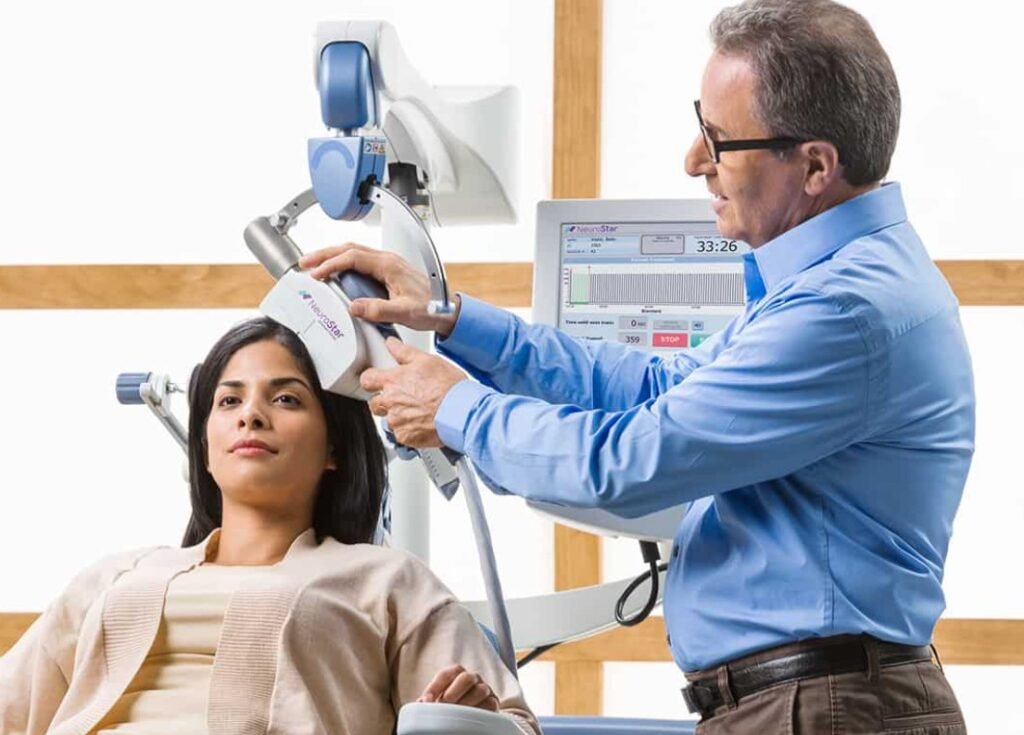
- A specialized electromagnetic coil is placed on the patient’s scalp
- Magnetic pulses stimulate brain cells in targeted regions
- Brain activity associated with depression gradually improves
Unlike medications, which affect the entire body, TMS works directly on specific brain circuits, making it a more targeted approach.
Another important advantage of TMS therapy is that it does not require anesthesia or sedation, and patients can return to normal activities immediately after each session.
Clinical Evidence Supporting TMS Therapy
Over the past two decades, extensive clinical research has evaluated the effectiveness of TMS therapy for treatment-resistant depression.
Scientific studies and clinical trials consistently show that TMS can significantly improve depressive symptoms in patients who have not responded to medications.
- Improved Mood Scores
Many clinical trials measure depression severity using standardized mood scales such as the Hamilton Depression Rating Scale (HDRS) and the Montgomery-Åsberg Depression Rating Scale (MADRS).
Research shows that patients undergoing TMS therapy often experience:
- Significant improvement in mood scores
- Reduced depressive symptoms
- Better emotional stability
Patients typically begin noticing improvements within two to four weeks of treatment.
- Increased Remission Rates
Remission occurs when depressive symptoms are significantly reduced or completely resolved.
Studies show that TMS therapy increases remission rates in patients with treatment-resistant depression compared with placebo or medication alone.
Clinical evidence indicates that:
- Around 50–60% of patients experience symptom improvement
- Approximately 30–40% achieve full remission
These outcomes are particularly encouraging for patients who previously failed to respond to multiple medications.
- Long-Term Maintenance Benefits
Another important advantage of TMS therapy is its long-term effectiveness.
Research suggests that many patients maintain improvement in their symptoms for several months or even years after completing a course of TMS treatment.
Some individuals may benefit from maintenance sessions, which help sustain symptom relief and prevent relapse.
Who Benefits Most from Transcranial Magnetic Stimulation (TMS) therapy?
Although TMS therapy can be helpful for many patients, certain groups tend to benefit the most.
Adults with Treatment-Resistant Depression
Patients who have tried at least one or two antidepressant medications without significant improvement are often good candidates for TMS therapy.
Individuals Seeking Non-Pharmacological Treatment
Some patients prefer treatments that do not involve medications due to concerns about side effects or long-term drug use.
TMS offers an effective alternative for those seeking drug-free treatment options.
Patients Who Cannot Tolerate Antidepressants
Many antidepressants cause side effects such as:
- Weight gain
- Sleep disturbances
- Sexual dysfunction
- Digestive problems
TMS therapy avoids systemic side effects because it targets the brain directly without affecting the rest of the body.
Safety and Tolerability of Transcranial Magnetic Stimulation (TMS) therapy
One of the biggest reasons TMS therapy has gained popularity is its excellent safety profile.
Unlike many psychiatric medications, TMS therapy does not produce systemic side effects.
Minimal Side Effects
The most common side effects include:
- Mild headache
- Scalp discomfort at the treatment site
- Temporary tingling sensation
These symptoms are usually mild and resolve quickly after treatment.
No Systemic Effects
Because TMS does not involve medication, it does not affect other organs such as the liver, kidneys, or digestive system.
This makes it a suitable option for patients who cannot tolerate medication-related side effects.
Very Low Risk of Seizures
Although TMS stimulates brain activity, the risk of seizure is extremely low when the therapy is performed by trained professionals following established safety guidelines.
What Patients Can Expect During Transcranial Magnetic Stimulation (TMS) therapy
TMS therapy is typically performed in an outpatient setting.
Each session usually lasts 20 to 40 minutes, and patients remain awake and comfortable during the procedure.
During the Session
- The patient sits in a comfortable chair
- A magnetic coil is positioned on the scalp
- Pulses create a tapping sensation on the head
The procedure is painless and well tolerated by most patients.
Treatment Schedule
Most treatment plans include:
- 5 sessions per week
- 4–6 weeks of therapy
Gradual improvement occurs as brain circuits involved in mood regulation become more active.
Why Expert Evaluation Is Important
Although TMS therapy is highly effective, it is essential that treatment is performed under the supervision of an experienced neurologist or mental health specialist.
Proper evaluation helps determine:
- Whether the patient has treatment-resistant depression
- If TMS therapy is appropriate
- The best stimulation protocol for optimal results
In Faridabad, Dr. Kunal Bahrani, recognized as the Best Neurologist for Transcranial Magnetic Stimulation (TMS) in Faridabad, provides advanced assessment and personalized treatment plans for patients suffering from depression and neurological disorders.
His expertise in neuromodulation therapies ensures that patients receive safe, evidence-based treatment tailored to their individual needs.
Conclusion
Treatment-resistant depression can be a challenging condition, but modern medical advances are providing new hope for patients who have not responded to traditional therapies.
Transcranial Magnetic Stimulation (TMS) has emerged as one of the most effective non-invasive treatments for depression supported by strong clinical evidence. Research shows that TMS therapy can significantly improve mood, increase remission rates, and provide long-term benefits for many patients with treatment-resistant depression.
With minimal side effects, no systemic impact, and convenient outpatient sessions, TMS therapy offers a promising solution for individuals seeking alternatives to medication.
For patients exploring advanced treatment options, consulting specialists like Dr. Kunal Bahrani, the Best Neurologist for Transcranial Magnetic Stimulation (TMS) in Faridabad, can help determine whether TMS therapy is the right choice for achieving better mental health and improved quality of life.
Frequently Asked Questions (FAQs)
- What is treatment-resistant depression?
Treatment-resistant depression occurs when depressive symptoms do not improve after trying at least one or two antidepressant medications.
- Is TMS therapy approved for depression?
Yes. TMS therapy is FDA-approved and widely used worldwide for treating major depressive disorder, especially in patients who do not respond to medications.
- How long does TMS therapy take to work?
Many patients begin noticing improvements within two to four weeks, though full treatment typically lasts four to six weeks.
- Is TMS therapy painful?
No. Most patients only feel mild tapping sensations on the scalp during treatment.
- Can I continue taking antidepressants during Transcranial Magnetic Stimulation (TMS) therapy
Yes. Many patients continue their medications while undergoing TMS therapy. Your doctor will guide you regarding your treatment plan.
- Are there serious side effects of Transcranial Magnetic Stimulation (TMS) therapy?
Serious side effects are rare. The most common side effects are mild headaches or scalp discomfort.
- How long do the results of Transcranial Magnetic Stimulation (TMS) therapy?
Many patients experience improvement for months or even years after treatment. Maintenance sessions may help sustain results.
- Who should not undergo Transcranial Magnetic Stimulation (TMS) therapy?
Patients with metal implants in or near the head (excluding dental fillings) may not be suitable candidates. A medical evaluation is required before starting treatment.