
Innovative Uses of TMS in Neurological Disorders
Advancements in neuroscience and medical technology have introduced several new treatment options that are transforming the management of neurological disorders. One such breakthrough therapy is Transcranial Magnetic Stimulation (TMS), a non-invasive brain stimulation technique that has gained widespread recognition for treating depression. However, the potential of TMS extends far beyond psychiatric conditions. In recent years, neurological research has increasingly focused on the uses of TMS to treat a variety of brain and nerve-related disorders.
Scientists and neurologists are discovering that targeted magnetic stimulation of specific brain regions can influence neural circuits responsible for movement, pain, and sensory processing. This has opened the door to innovative therapeutic possibilities for patients suffering from conditions that were once difficult to manage.
Today, TMS is being explored as a promising treatment for stroke rehabilitation, Parkinson’s disease, migraine, and chronic pain disorders. With ongoing clinical research and technological improvements, the role of TMS in neurology continues to expand.
In Faridabad, Dr. Kunal Bahrani, recognized as the Best Neurologist for Transcranial Magnetic Stimulation (TMS) in Faridabad, offers advanced neuromodulation therapies to help patients benefit from modern neurological treatments.
This article explores the innovative uses of TMS in neurological disorders, how the therapy works, and what the future holds for this exciting technology.
What Is Transcranial Magnetic Stimulation (TMS)?
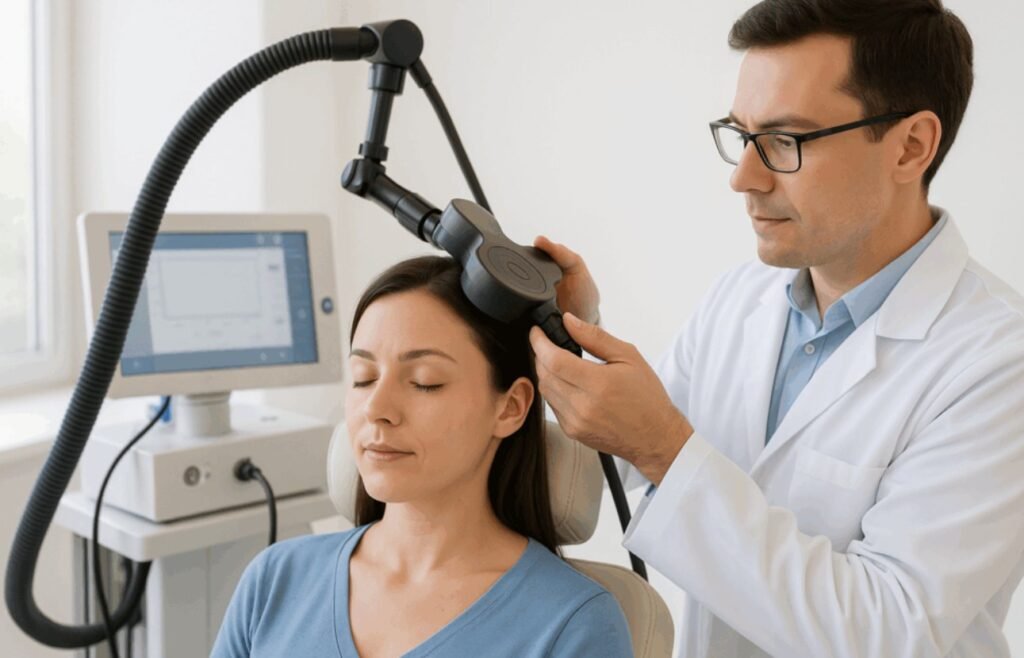
Transcranial Magnetic Stimulation is a non-invasive brain stimulation technique that uses magnetic fields to stimulate specific areas of the brain.
During TMS therapy:
- An electromagnetic coil is placed on the scalp
- Magnetic pulses pass through the skull
- These pulses stimulate neurons in targeted brain regions
The magnetic stimulation induces small electrical currents in the brain that modulate neural activity, helping improve communication between brain cells.
Unlike invasive brain procedures, TMS does not require surgery, anesthesia, or sedation. Patients remain awake during treatment and can return to normal activities immediately afterward.
While initially used for depression, neurologists are now exploring TMS as a therapeutic tool for several neurological conditions.
Innovative Neurological Applications of TMS
- Stroke Rehabilitation
Stroke is one of the leading causes of long-term disability worldwide. After a stroke, many patients experience weakness or paralysis on one side of the body due to damage to the brain’s motor control areas.
TMS therapy is being investigated as a powerful tool in stroke rehabilitation.
How TMS Helps Stroke Recovery
After a stroke, the brain undergoes a process known as neuroplasticity, where surviving brain cells reorganize and form new connections. TMS can enhance this process by stimulating the motor cortex, the brain region responsible for voluntary movement.
Benefits of TMS in stroke rehabilitation may include:
- Improved motor function
- Increased muscle control
- Enhanced coordination
- Faster recovery when combined with physical therapy
Research suggests that combining TMS therapy with rehabilitation exercises may significantly improve recovery outcomes in stroke patients.
- Parkinson’s Disease
Parkinson’s disease is a progressive neurological disorder that affects movement, causing symptoms such as tremors, stiffness, slow movement, and balance problems.
Traditional treatment focuses on medications that regulate dopamine levels in the brain. However, these medications may become less effective over time or produce unwanted side effects.
TMS therapy is being explored as a complementary treatment for symptom modulation in Parkinson’s disease.
Potential Benefits of TMS for Parkinson’s Patients
Studies suggest that stimulating specific brain regions involved in movement control may help:
- Reduce tremors
- Improve motor coordination
- Enhance walking and mobility
- Reduce stiffness and muscle rigidity
Although TMS is not yet a standard treatment for Parkinson’s disease, ongoing research shows promising results in improving quality of life for many patients.
- Migraine Prevention and Treatment
Migraine is a chronic neurological disorder characterized by severe headaches, nausea, light sensitivity, and visual disturbances.
Many patients struggle with frequent migraine attacks despite medications and lifestyle changes.
TMS therapy is now being explored as a non-drug approach for migraine prevention and pain reduction.
How TMS Helps Migraine Patients
Migraine attacks are believed to involve abnormal brain activity and disrupted neural signaling. TMS can help regulate these signals by targeting areas involved in pain processing and sensory perception.
Potential benefits include:
- Reduced frequency of migraine attacks
- Decreased severity of headaches
- Shorter duration of migraine episodes
- Improved response to preventive treatments
Some migraine patients experience relief after regular TMS sessions, especially when other treatments have failed.
- Chronic Pain Disorders
Chronic pain conditions can significantly impact quality of life, often leading to emotional distress, sleep problems, and reduced mobility.
TMS therapy is being studied for several types of chronic pain, including:
- Neuropathic pain
- Fibromyalgia
- Central pain syndromes
How TMS Helps in Chronic Pain
Chronic pain often results from abnormal activity in the brain’s pain-processing networks. TMS helps by modulating neural circuits involved in pain perception.
Benefits may include:
- Reduced pain intensity
- Improved pain tolerance
- Better sleep quality
- Enhanced overall quality of life
TMS therapy is particularly valuable for patients who cannot tolerate strong pain medications or want to avoid long-term drug use.
Advantages of TMS in Neurological Treatment
TMS therapy offers several advantages that make it an attractive treatment option in neurology.
Non-Invasive Procedure
Unlike brain surgery or implanted stimulation devices, TMS does not require incisions or hospitalization.
Minimal Side Effects
Most patients tolerate TMS very well. The most common side effects include:
- Mild headache
- Scalp discomfort
- Temporary tingling sensation
These symptoms are usually mild and resolve quickly.
No Anesthesia Required
TMS sessions do not require sedation, allowing patients to remain fully awake during treatment.
Outpatient Convenience
Each session typically lasts 20–40 minutes, and patients can resume normal activities immediately afterward.
What the Future Holds for TMS in Neurology
The future of TMS therapy is extremely promising. Researchers are continually developing new technologies and treatment protocols that may improve its effectiveness for neurological disorders.
Precision Brain Targeting
Advanced brain imaging techniques are allowing doctors to target specific brain circuits with greater accuracy, leading to more personalized treatments.
Personalized Treatment Protocols
In the future, neurologists may tailor TMS therapy based on a patient’s:
- Brain activity patterns
- Genetic factors
- Individual response to treatment
This personalized approach could maximize treatment success.
Combination with Rehabilitation
TMS therapy may increasingly be used alongside other therapies such as:
- Physical therapy
- Cognitive rehabilitation
- Pain management programs
Combining treatments could significantly enhance recovery outcomes.
Why Expert Evaluation Is Important
Although TMS therapy shows great promise, proper evaluation by an experienced neurologist is essential to determine whether the treatment is appropriate for a specific condition.
A specialist will assess:
- The patient’s neurological condition
- Medical history
- Suitability for neuromodulation therapy
In Faridabad, Dr. Kunal Bahrani, widely recognized as the Best Neurologist for Transcranial Magnetic Stimulation (TMS) in Faridabad, provides advanced neurological care and innovative treatment options using modern neuromodulation technologies.
His expertise ensures that patients receive safe, evidence-based, and personalized treatment plans tailored to their neurological needs.
Conclusion
Transcranial Magnetic Stimulation has emerged as one of the most exciting developments in modern neurology. While originally developed for psychiatric conditions, its applications are rapidly expanding into the treatment of several neurological disorders.
From stroke rehabilitation and Parkinson’s disease to migraine prevention and chronic pain management, TMS therapy offers a non-invasive and promising treatment option for patients who may not benefit from traditional therapies.
As research continues and technology advances, TMS is expected to play an even greater role in neurological care, offering hope to millions of patients worldwide.
For individuals seeking advanced neurological treatments, consulting experts like Dr. Kunal Bahrani, the Best Neurologist for Transcranial Magnetic Stimulation (TMS) in Faridabad, can help explore whether TMS therapy may be a suitable and effective treatment option.
Frequently Asked Questions (FAQs)
- What is TMS therapy used for in neurology?
TMS therapy is being studied for several neurological conditions including stroke rehabilitation, Parkinson’s disease, migraine, and chronic pain disorders.
- Is TMS therapy safe?
Yes. TMS is considered safe when performed by trained medical professionals. Side effects are usually mild and temporary.
- Can TMS help stroke recovery?
Yes. Research suggests that stimulating the motor cortex with TMS may help improve movement and muscle control in stroke patients.
- Is TMS therapy approved for migraine?
Some TMS devices have been approved for migraine treatment, and research continues to explore its effectiveness for prevention and pain relief.
- Can TMS treat Parkinson’s disease?
TMS is not a cure for Parkinson’s disease but may help improve certain symptoms such as tremors and motor function.
- How long does a TMS session take?
A typical session lasts 20 to 40 minutes, depending on the treatment protocol.
- How many TMS sessions are required?
Most treatment plans involve multiple sessions over several weeks, but the exact number depends on the condition being treated.
- Who should avoid TMS therapy?
Patients with metal implants in or near the head, such as certain medical devices, may not be suitable candidates. A neurologist must evaluate eligibility before treatment.